My Search for the Top Writing Notebooks: Practical Testing and Real Results
I have been writing by hand for long enough that I have lost track of how many notebooks I have filled. Journals, sketchbooks, field notes, work logs, and the odd half-used spiral that got repurposed for grocery lists. Somewhere in that stack I found the ones that actually work for serious daily writing. The rest were distractions. After years of trial and error, I have settled on a short list that I keep coming back to. These are, in my experience, the top writing notebooks for anyone who puts pen to paper every day.
What Makes a Notebook Good for Writing?
Before I get into specific brands, I should explain what I look for. Paper quality is the main thing. If the ink bleeds through or the pages feel like newsprint, I will not use the notebook for long. I prefer a smooth surface that lets a fountain pen glide without catching. I also need binding that stays flat when the notebook is open. A notebook that fights you while you write is a notebook that gets abandoned.
Size matters more than people think. A pocket notebook is great for jotting down ideas, but for sustained writing I want something that fits on a desk and holds a decent amount of text per page. A5 is my sweet spot. It is portable enough to carry in a bag but large enough for real paragraphs. Dot grid is my preferred ruling because it gives structure without being intrusive, but I have used lined and blank too.
Durability is another factor. A notebook that falls apart after a few weeks is not worth the paper it is printed on. I have had notebooks where the spine cracked and pages started falling out. That is frustrating, especially when you have filled half the book with writing you care about.
The Brands That Delivered
I tested a range of notebooks over the last few years. Some were recommended by other writers. Some I picked up on a whim. A few I bought because I recognized the brand name. Here is what I found.
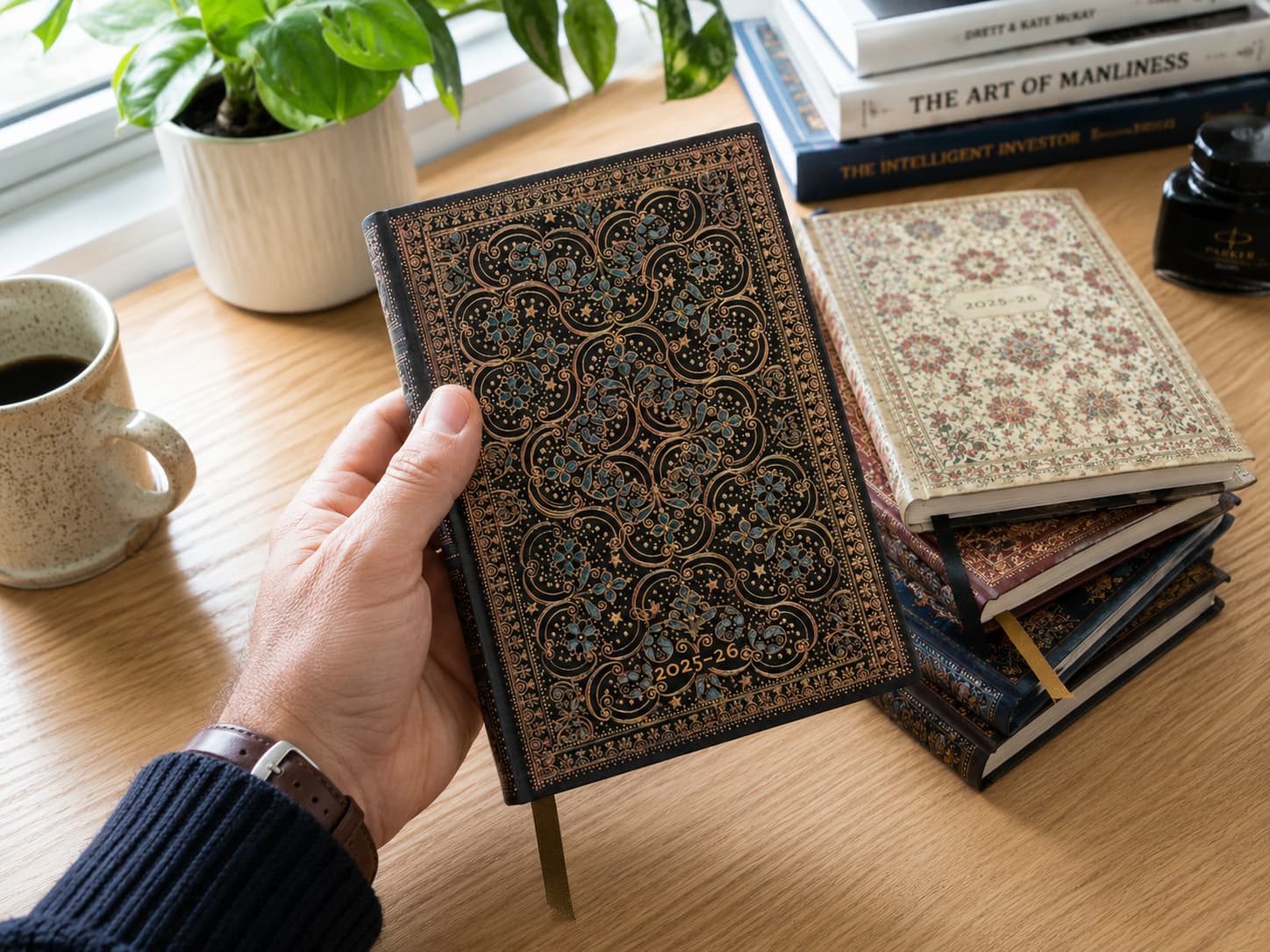
Leuchtturm1917
The Leuchtturm1917 notebook was one of the first I tried when I started taking notebook quality seriously. It has numbered pages, a table of contents, and two ribbon bookmarks. The paper is smooth and handles most fountain pen inks well. I have experienced some ghosting with wetter nibs, but nothing that makes the back of the page unusable. The binding is solid, and the notebook lies reasonably flat once you break it in. It is a reliable choice for daily writing and one of the top writing notebooks in its class.
Rhodia
Rhodia is a brand I trust for its paper. The orange cover and black binding are iconic, but what matters is the Clairefontaine paper inside. It is exceptionally smooth. Fountain pens write without any scratchiness, and the ink dries quickly. The spiral-bound pads and staple-bound notebooks are great for quick writing sessions, but they do not have the same long-term durability as a sewn binding. For draft work and notes, Rhodia is hard to beat.
Midori MD
The Midori MD notebook is a minimalist dream. The paper is cream-colored and has a slight texture that feels wonderful under a nib. It is made by Midori in Japan, and the quality is evident from the first page. The binding is simple but strong, and the notebook opens flat without effort. I have used a Midori MD for journaling for several months, and the pages have held up well with a TWSBI fountain pen and a Pilot G2. The lack of a cover means the notebook can get scuffed, but I actually like the worn look over time.
Hobonichi Techo
The Hobonichi Techo is famous among planners, but I use it as a daily writing notebook. It is A6 size, which is small, but the thin Tomoe River paper holds an astonishing amount of ink without bleeding. The paper is so thin you can see writing on the other side, but it does not bleed through. The lay-flat binding is excellent. I have one that I have been using for over a year, and it is still intact. It is not the cheapest option, but the quality justifies the price.
Archer & Olive
Archer & Olive makes notebooks with thick, high-quality paper that can handle just about any pen. The pages are 160 gsm, so there is no ghosting and no bleed-through. They come in a variety of sizes and cover designs. The binding is sewn and the notebook opens flat. I have used one for ink testing and bullet journaling, and it has held up perfectly. The thickness does mean the notebook is heavier, so it is less portable, but for desk use it is fantastic.
Dingbats
Dingbats notebooks are made from sustainable materials, and the paper is excellent. It is 100 gsm and has a slight tooth that fountain pens love. The binding is vegan leather and the notebook lies flat. I have used a Dingbats notebook for a writing project and was impressed by how well it held up. The paper is bright white, which some people prefer for contrast. It is a solid alternative to the more common brands.
Notebooks That Serve a Specific Purpose
Some notebooks are not designed for long-form writing but excel at specific tasks. Field Notes is a classic example. The small pocket size is perfect for capturing ideas on the go. The paper is not fountain-pen friendly, but a Pilot G2 works fine. I keep a Field Notes notebook in my jacket pocket for notes and sketches. It is not a top writing notebook for extended sessions, but it is essential for quick capture.
Baron Fig notebooks have a clean design and good paper. The Advocate size is larger than A5 and great for brainstorming. The paper is smooth and handles most pens well. I have used one for project planning, and the dotted grid is well-implemented. It is a good all-around notebook, though not as specialized as some others.

Notebook Therapy offers a wide range of designs, from floral covers to galaxy patterns. The paper quality varies by line, but their most popular notebooks have 160 gsm paper similar to Archer & Olive. They are popular on social media, and for good reason. The paper handles heavy ink without bleeding, and the binding is sturdy. If you want a notebook that looks as good as it writes, this is a strong choice.
Rocketbook is a different beast. It is designed to be reused. You write with a Pilot Frixion pen, then microwave the notebook to erase the ink. The paper is smooth and works well for note-taking, but it is not ideal for fountain pens or permanent journaling. I use a Rocketbook for meeting notes and temporary lists. It is practical, but it does not replace a traditional notebook for meaningful writing.
Paper and Tools Matter
The notebook is only part of the equation. The pen you use can make or break the experience. I have written with everything from disposable ballpoints to fountain pens costing hundreds of dollars. The TWSBI fountain pen is a favorite for daily use because it is reliable and affordable. The Pilot G2 is a great gel pen that works on any paper. JetPens is a good source for finding pens and notebooks that pair well together.
Bristol paper is not something I use in notebooks often, but I have seen it in some high-end sketchbooks. It is very smooth and holds up to heavy ink. Strathmore makes excellent Bristol paper pads for artists, but they are not designed for writing. Clairefontaine, the paper maker behind Rhodia, produces some of the best writing paper in the world. If you see a notebook labeled with Clairefontaine paper, it is worth trying.
Peter Pauper Press is a publisher that also makes beautiful notebooks. I have one of their pressed-flower-covered journals, and the paper is surprisingly good for the price. It is not as refined as a Leuchtturm1917 or a Midori MD, but it has charm and character. The binding is not as durable, but for a casual journal it works fine.
The Trade-Offs
No single notebook is perfect for everyone. The top writing notebooks in my list each have strengths and weaknesses. The Hobonichi Techo has incredible paper but is small. The Archer & Olive has thick paper but is heavy. The Leuchtturm1917 is a great all-rounder but shows some ghosting. The Midori MD is beautiful but has no cover. You have to decide what matters most to you.
I have learned that the best notebook is the one you actually use. It does not matter if it is a Moleskine or a Dingbats or a cheap spiral from the drugstore. If the paper and binding work for your writing style, that is the right notebook. I have tried Moleskine notebooks in the past, and while the covers look great, the paper has become inconsistent over the years. Many fountain pen users have moved on for that reason. It is a shame, because the design is iconic.
I also appreciate notebooks that lay flat. Lay-flat binding is a feature I look for now. It makes writing on both sides of the page much easier. The Hobonichi Techo and the Midori MD both have excellent lay-flat binding. The Archer & Olive notebooks do as well. If a notebook does not lay flat, I find myself fighting it, and that interrupts the flow of writing.

Final Thoughts
After testing dozens of notebooks, I keep returning to a core group. The Leuchtturm1917 for general journaling. The Midori MD for pure writing pleasure. The Hobonichi Techo for daily logging. The Archer & Olive for heavy ink work. The Rhodia for quick notes. These are the top writing notebooks in my experience, but I am always open to trying new ones. The search is part of the fun.
If you are just starting out, I would recommend trying one notebook from different categories. Get a Leuchtturm1917 for structure, a Midori MD for sensory experience, and a cheap spiral for rough drafts. See what feels right. There is no wrong answer. The only mistake is not writing at all.
I keep a stack of notebooks on my desk. Some are half full, some are brand new. They each have a purpose. The key is to match the tool to the task. I hope this helps you find your own favorite. Happy writing.